
Culture Lab
Templeton Grant

Dr. Michele Gelfand
Stanford University

Dr. Ying Lin
Hong Kong University of Science and Technology
.jpg)
Dr. Jing Lin
Stanford University
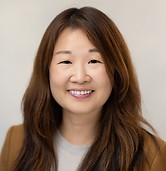
Dr. Ashley Fulmer
Georgia State University

Dr. Silvia Sonderegger
University of Nottingham
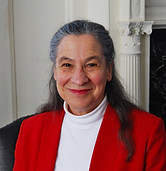
Dr. Carol Ember
Yale University
Culture of trust: Unlocking the key to human cooperation across the globe
Trust is fundamental to the fabric of social relations. It is a key contributor to citizen wellbeing, societal cohesion, democracy, and a well-functioning society. Despite its centrality, our understanding of trust around the world remains surprisingly narrow. Most prevailing conceptualizations and measures of trust are primarily built in and for WEIRD (Western, Educated, Industrialized, Rich, and Democratic) societies, centering on the unconditional, dispositional belief in others’ internal trustworthiness. Measured this way, societies that don’t fit this standard view of trust tend to be considered “low-trust”. This creates a need and an opportunity to refresh and broaden our lens: these societies may not trust less, but rather establish and express trust in culturally distinct ways. The central objective of our research is to document how different bases of trust vary across the world and to understand how those different bases have evolved to adapt to the specific ecologies that people face.
Some initial research has identified societal variation in the nature of trust. Seminal work by Yamagishi and his colleagues (Yamagishi & Yamagishi, 1994; Yamagishi, 2011) found that contrary to lay assumptions, Japanese are much lower in intrinsic trust and cooperate less in anonymous contexts as compared to Americans. This is because, in tight-knit societies contexts like Japan, trust is established through assurance mechanisms–i.e., norms and networks of committed relationships that produce high levels of felt accountability. According to Yamagishi, such assurance mechanisms reduce uncertainty and guarantee mutual cooperation because defecting could severely damage one’s self-interest (i.e., through punishment, gossip, and/or ostracism). Importantly, in such contexts, people feel insecure and place less ‘trust’ in others in social environments that lack assurance mechanisms. In this respect, trust in non-WEIRD contexts (i.e., expectations and confidence in others’ behavior because of felt accountability) differs greatly from trust in WEIRD contexts (i.e., the default belief in others’ intrinsic trustworthiness).
Yet despite the initial theorizing offered by Yamagishi, there is no research that has systematically a) measured differences in assurance-based and intrinsic trust across the globe, b) traced differences in assurance-based and intrinsic trust to varying ecological, cultural, and institutional conditions within a cultural evolution framework, and c) studied the implications of assurance-based and intrinsic trust for sustaining cooperation in human groups both in the modern area and historical record.
Accordingly, our objectives are:
Research Goal 1: To reconceptualize trust by focusing on different bases of trust and developing a new way to measure it.
Research Goal 2: To document global variation in different bases of trust and examine their ecological, historical, and institutional correlates.
Papers in progress--Stay tuned!